130th Anniversary
In December 2026, the Nikke Group will reach a major milestone: the 130th anniversary of its founding.
We offer our heartfelt thanks to our customers, business partners, shareholders, and local communities, and to each employee who has worked together with us to grow the Group, all of whom have supported our journey to date.
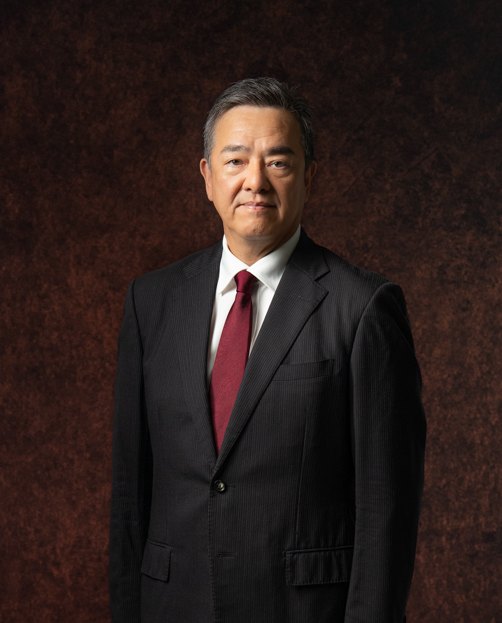
 Yutaka Nagaoka
Looking back, the 130 years since our founding in 1896 have by no means been smooth. Each era brought great waves of political, economic, and social change, but the Nikke Group responded to the demands of the times by undertaking transformation and continuing to take on challenges in new business domains. At the root of it all was a desire to support people’s daily lives and contribute to the “creation of future lifestyles,” making life more fulfilling.
In the CF140 Vision, our new medium- to long-term vision looking ahead to the next 10 years and starting in December 2026, we have renewed this commitment and set our Purpose as follows: “As a corporate group that is gentle and warm toward people and the planet, we will create ‘irodori’ lifestyles.”
In recent years, the business environment has grown ever more uncertain amid major ongoing changes such as the COVID-19 pandemic, instability in the international situation, rising prices, and intensifying competition to secure human resources. Under the CF140 Vision, however, the Nikke Group will continue to grow together with society, drawing on the technologies and trust we have built up and our unflagging spirit of challenge in the face of change as our strengths, and aim to become a “corporate group that brings people together” and a “corporate group that is chosen by people.” We ask for your continued support and patronage.
130 Years of History
~ The Journey of 5 Eras, from Meiji to Reiwa ~
18961949
1896
Nikke’s History Began in the “Manchester of the Orient”
In the 1890s, the Hanshin area was seeing new industries emerge one after another and was known as the “Manchester of the Orient.” Enveloped in the energy of a rapidly developing society, The Japan Wool Textile Co., Ltd. (Nikke) was born. Nikke’s challenge, setting out with its eyes on the future at a turning point in history, began here.
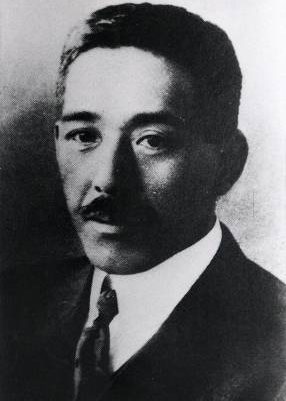
Entrepreneur Seibei Kawanishi (1865-1947) foresaw the future potential of the woolen textile business and recruited a group of Kobe businessmen to establish The Japan Wool Textile Co., Ltd. in 1896. He built up Nikke into a leading company in the wool industry. He also put his significant skills to use in launching various businesses to form the Kawanishi Zaibatsu conglomerate.
1899
The Origin of Our “Manufacturing”: The Kakogawa Mill Begins Operations
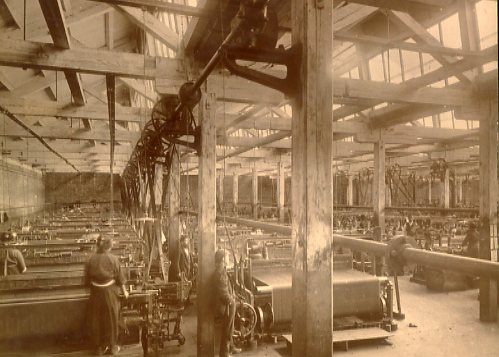
3 years after the company’s founding, our first mill was born in Kakogawa, Hyogo Prefecture. The uncompromising spirit of “manufacturing” that began here has been passed down in Nikke’s DNA to this day. The former mill site, having completed its role, has now been transformed into the shopping center Nikke Parktown, which is loved by the local community.
1903
Founder Seibei Kawanishi’s Decision: Crossing the Sea in Search of the “Real Thing”
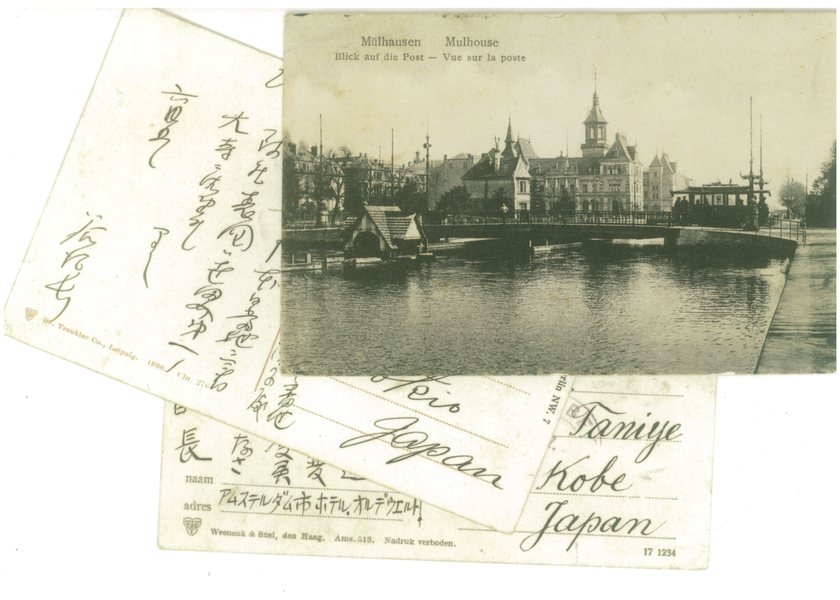
“Unless we learn overseas technology, we will never be able to beat imported goods.” Overriding opposition from the board of directors, which was worried about the economic slowdown, Seibei Kawanishi decided to send engineers to Europe. The pursuit of the highest quality and a spirit of challenge that keeps taking a step forward in any era are engraved in Nikke’s DNA.
1919
Beyond 100 Years: The History Woven by the Red-Brick Mill
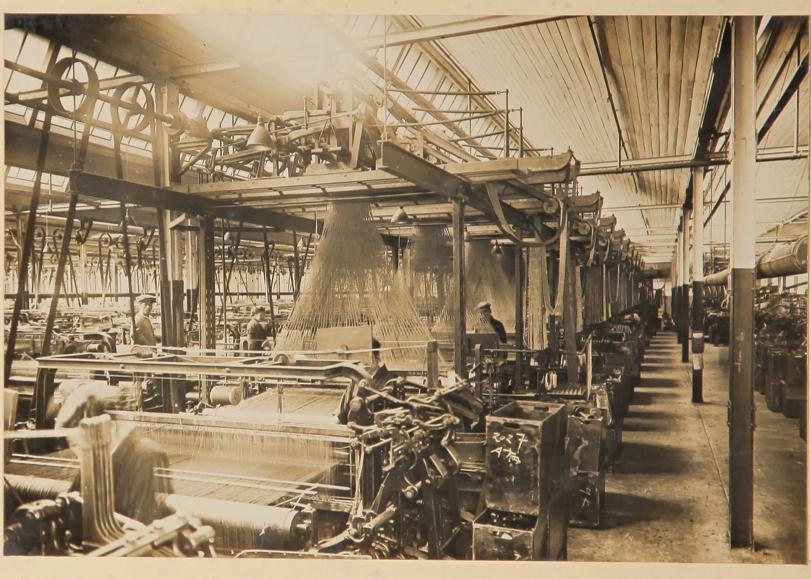
The Innami Mill, the main base supporting Nikke’s woolen fabric manufacturing, began operations. The red-brick buildings, which retain the look of the time they were built, are still in active use more than 100 years later. In spring, the cherry trees on the grounds bloom in full, quietly speaking to the depth of our history and tradition.
1923
Victor Knitting Yarn, Which Brought “Knitting Culture” to Japanese Homes
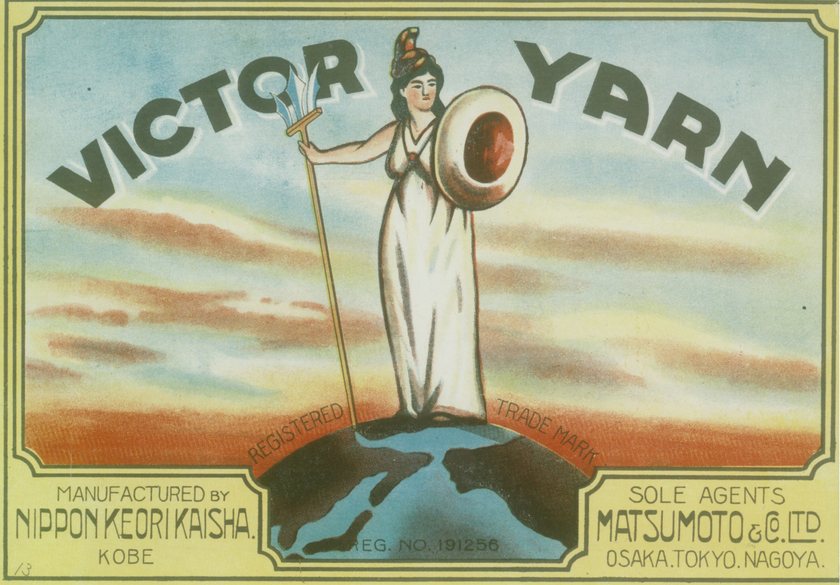
In the Taisho era, as the warmth of hand knitting spread into homes, “Victor Mark Yarn” appeared. Born as a pioneer of top-quality domestically produced dyed yarn, it stayed close to the lives of people knitting sweaters and gloves. It remains a byword for Japanese household craft yarn, loved across the ages.
1929
A Credo Held for About 100 Years: “People Are the Greatest Asset”
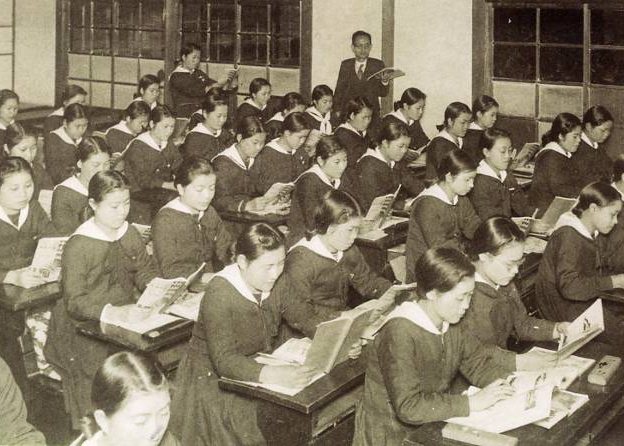
Ahead of the revision of labor-hour laws, Nikke established schools inside its mills. Among them, the “Nikke Gifu Girls’ School” became the only company-affiliated school in Japan at the time to gain the qualification of a regular girls’ school. It shows Nikke’s stance of placing “human resources development” at the center of management from about 100 years ago.
1937
A Symbol of Kobe That Has Watched Over Turbulent Times
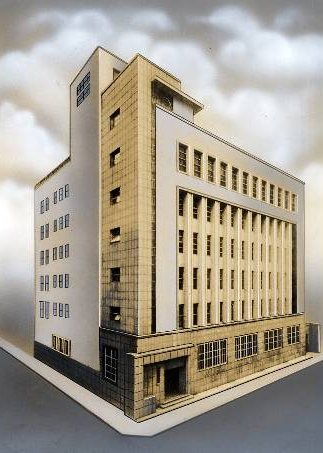
The “Nikke Kobe Building,” which remains our registered head office to this day, was completed. It overcame the rough waves of the times, including requisition by GHQ after the war, and as our head office for many years it has been a witness to history, watching over the company’s growth. Its classical appearance remains deeply woven into the Kobe cityscape today.
1949
Securities Code “3201”
Together with its postwar restart, the company relisted on the Tokyo Stock Exchange. The securities code assigned was “3201.” As a “zero-one issue,” a mark of companies that spearheaded Japan’s industrial recovery, it set out into a new era with even greater trust and pride.
19501999
1957
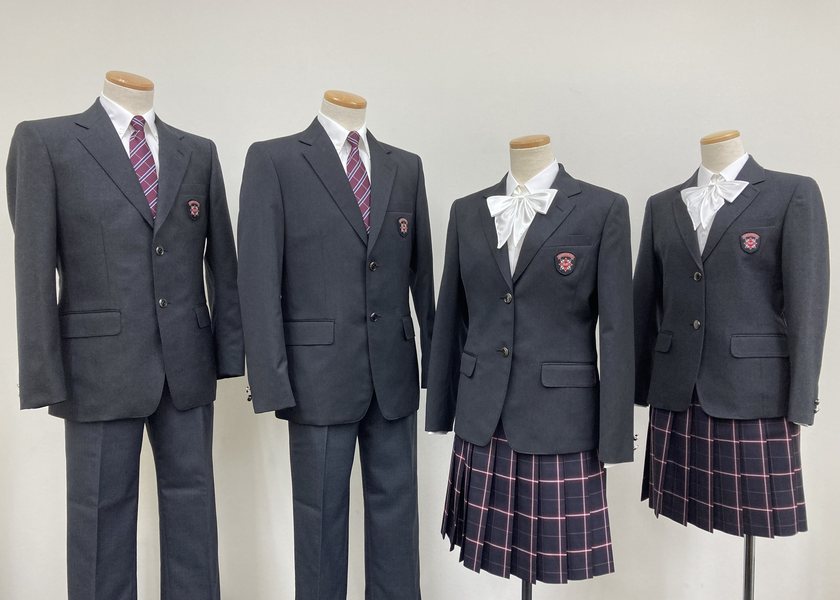
You Might Have Worn It, Too? Nikke, the “School Uniform” Company
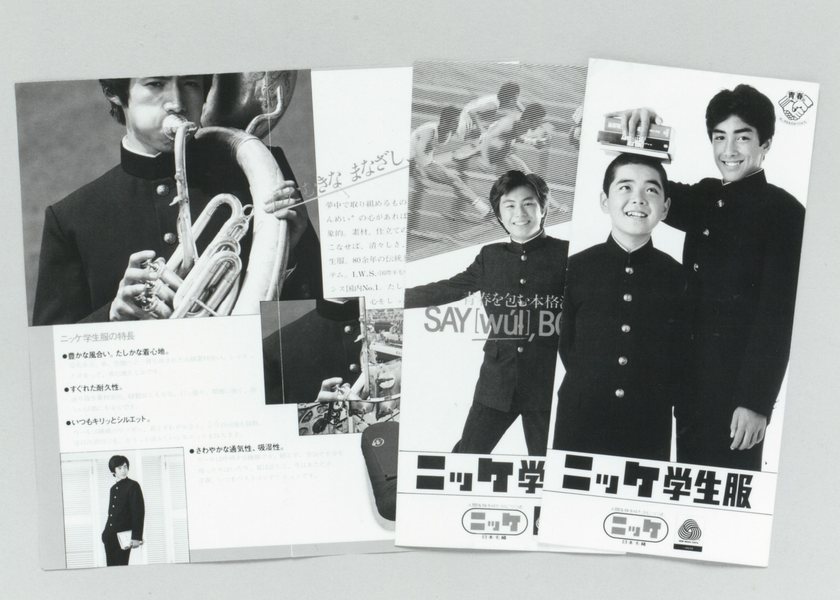
Amid the changes brought by the spread of synthetic fibers, Nikke launched the “Nikke Student Uniform Association (1957)” and the “Nikke Girls’ Commuting Uniform Association (1965),” contributing to the spread of high-quality school uniforms that make the most of the appeal of wool. In particular, it earned overwhelming trust in girls’ school uniforms and established the firm business model of the school uniform business that continues to this day.
1962
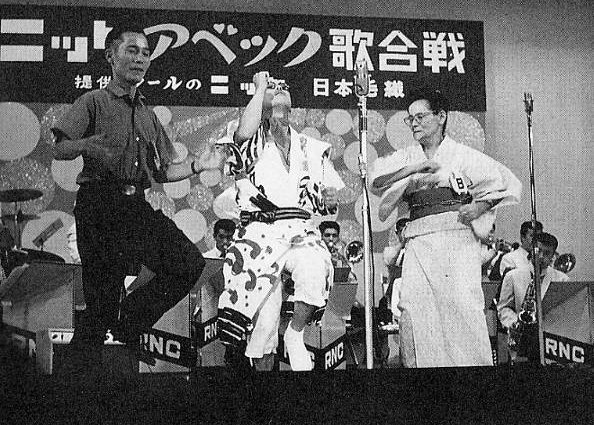
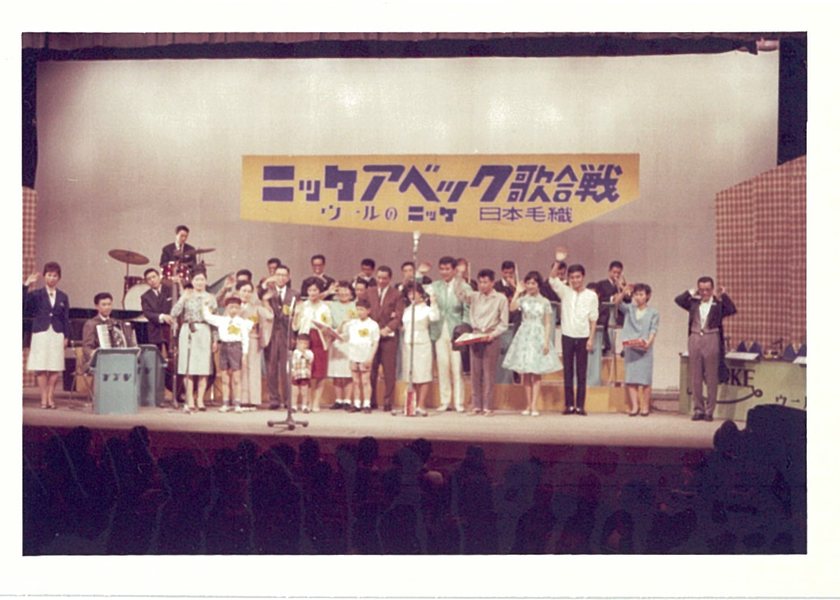
1962 | The Nation Goes Wild! “Nikke Avec Utagassen”
Famous for host Tony Tani’s catchphrase “And what’s your name, then?”, “Nikke Avec Utagassen” (Nikke Couples Song Contest) became a hugely popular program said to have averaged a 30% audience rating. It was broadcast nationwide with Nippon Television as the key station (produced by Yomiuri Telecasting Corporation), bringing smiles to living rooms all across Japan.
1964
A Mark of Quality That Meets World Standards
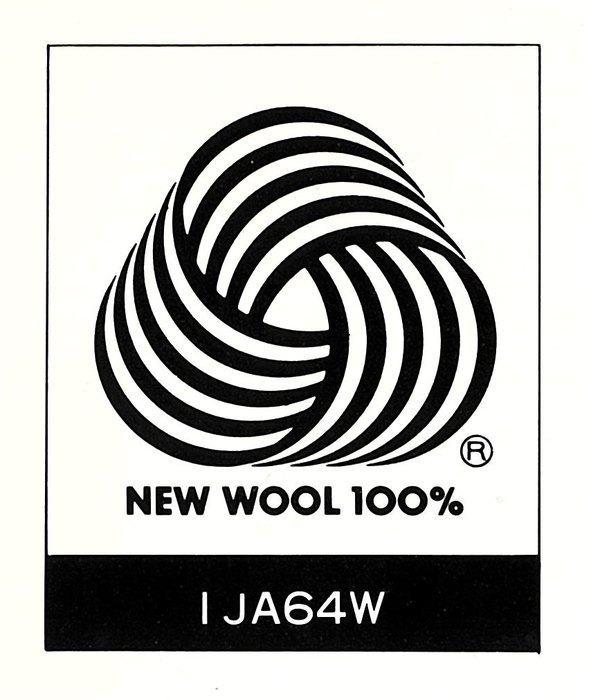
The Woolmark is the international symbol that indicates the high quality of wool products. Nikke cleared the strict quality standards and obtained Japan’s first domestic license (No. 1). Our uncompromising technical capabilities and absolute commitment to quality were recognized around the world.
1968
Ahead of the Times: Balancing “Raising Children” and “Working.”
More than 20 years before the Childcare Leave Act took effect, Nikke launched its own childcare leave system. Rather than an either-or choice between “work or family,” it creates an environment where everyone can keep working for a long time. A warm corporate culture that values people has been passed down to the present.
1984
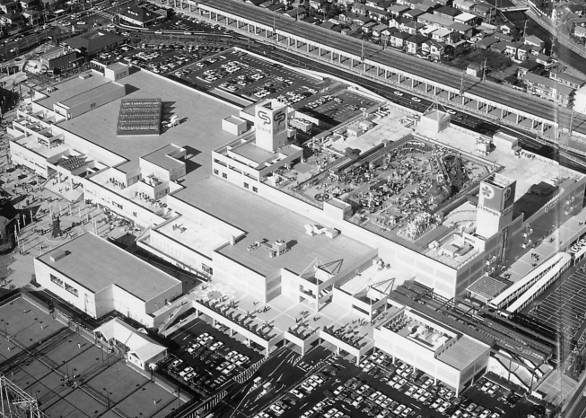
Creating a “Town” Where Smiles Gather from a Former Factory Site
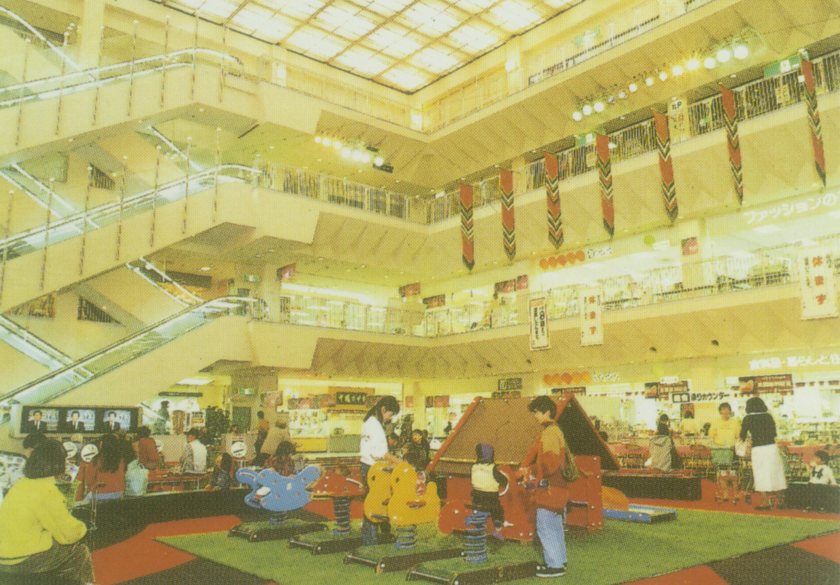
Turning a former factory site into a new attraction for the community. Nikke Parktown, the shopping center born on the site of the former Kakogawa Mill, was a challenge to “create new value in Kakogawa” and to “keep shoppers who used to flow out to neighboring cities in the local area and revitalize the town.” A manufacturing company spread its wings into town development.
1988
A Community Hub in Ichikawa Where Culture and Daily Life Intersect
Nikke Colton Plaza, opened in Ichikawa City, Chiba Prefecture, is a community hub that goes beyond a mere commercial facility. Adjacent to it are the Ichikawa City Central Library and the Chiba Prefectural Museum of Science and Industry, built on land partly provided free of charge, and it continues to stay close to the community as a rich space overflowing with the enjoyment of daily life and learning.
20002026
2000
“Forever in the Town You Know”: Nikke’s Reassuring Nursing Care
Nikke’s nursing care business began with the opening of a day service facility. Today we operate multiple “nursing care villages” that integrate day-care facilities and fee-based nursing homes with care services. Without changing their environment, we deliver to the community the kindness that lets people keep living as themselves, with peace of mind, in the town they are used to.
2008
From “Nihon Keori” to “Nikke”: A Deepening Brand
We formally adopted “Nikke,” which had been our common name, as the company name. While carrying on the history since our founding embodied in “Nihon Keori (Japan Wool Textile),” we took on challenges in diverse business areas beyond textiles, expressing a strong determination to move into the next era by solving the issues of an increasingly diverse society.
2013
Creating Energy in the Middle of Town: “Nikke Machinaka Power Plants”
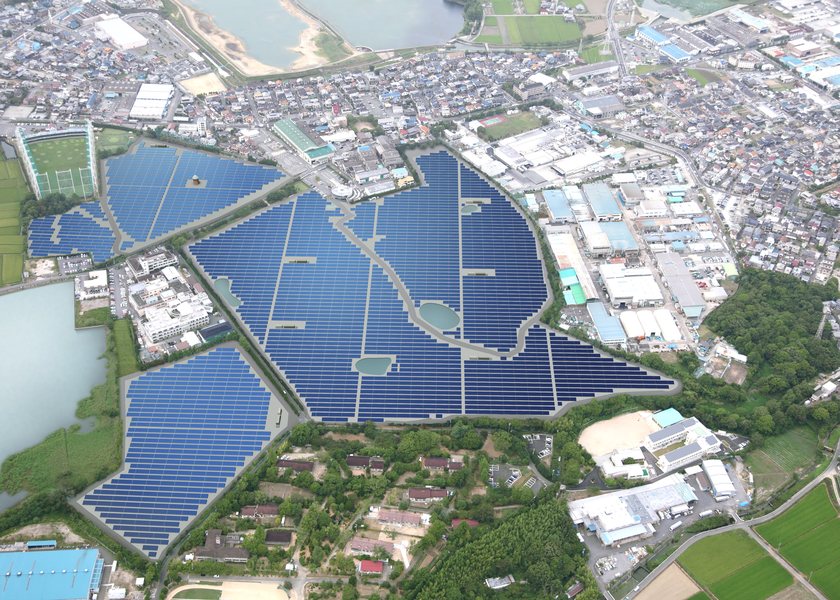
“Nikke Machinaka Power Plants” use former facility sites and building rooftops to generate renewable energy while keeping the burden on the environment low. The Akashi Tsuchiyama facility, which opened that year, was a power plant with about 55,000 solar panels, among the largest in the prefecture at the time. The Nikke Group aims to realize a sustainable global environment while being considerate of the local environment.
2017
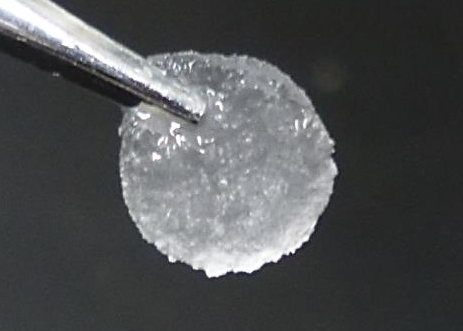
Textile Technology Changes Medicine: The Challenge of “Bioabsorbable Materials”
That year we established the Medical Business Preparation Office. Today, applying the textile technologies we have cultivated over many years, and centered on Kyoto Medical Planning Co., Ltd., we are developing products whose core technology is “bioabsorbable materials,” which are naturally absorbed in the body and ease the physical and mental burden on patients, expanding our business into the field that supports people’s lives and health.
2021
Industrial Nonwoven Fabrics Business: The Challenge of Becoming a Top Runner
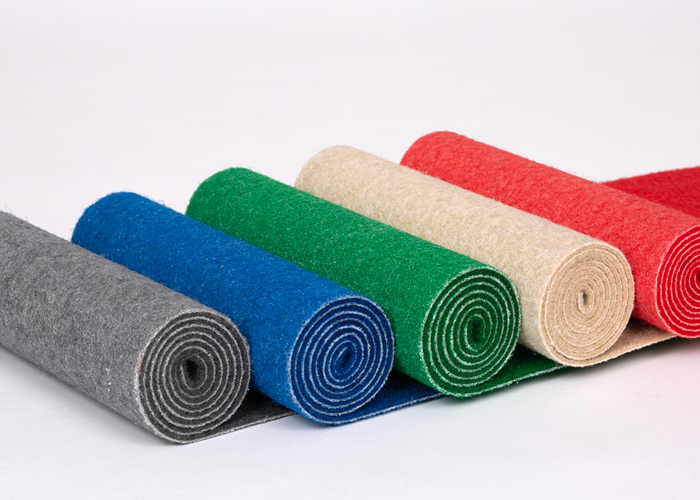
Starting with bringing Fuji Corporation into the Group that year, we rapidly strengthened our industrial nonwoven fabrics business through continuous M&A and the pursuit of synergies. In the field of industrial nonwoven fabrics, which play active roles in unnoticed places in society, such as materials for automobiles and OA equipment and filters for dust collectors, we have become one of the largest companies in Japan and aim for further growth in overseas markets.
2024
From Clothes to Clothes: The “WAONAS” Initiative to Change the Common Sense of Throwing Away
The “WAONAS” project, which collects wool clothing and regenerates it into new clothing, has launched. From “throwing away” to “circulating.” Expanding the circle widely with partner companies and local communities, we aim to realize a sustainable circular economy.