Realizing a
Circular Economy
Efforts toward a “circular economy” (resource circulation) to curb the mass production and mass disposal of clothing and textile products are accelerating in Europe and around the world. The “Strategy for Sustainable and Circular Textiles” published by the European Commission in March 2022 includes the Ecodesign for Sustainable Products Regulation (ESPR) to improve product durability and reusability, a ban on the disposal of unsold clothing, and the Digital Product Passport (DPP) to ensure traceability, and we have entered an era in which products that fail to meet the standards face severe penalties such as suspension of distribution.
The Nikke Group has so far promoted the upcycling (return to raw material) of cutting scraps generated in the manufacturing process, as well as schemes to collect and recycle used uniforms (“Eco Ship” and “Eco Network”). Now we are starting to go one step further toward realizing a circular economy.
WAONAS, Japan’s First Wool Clothing Collection and Circulation Project Turning “Clothing into Clothing”
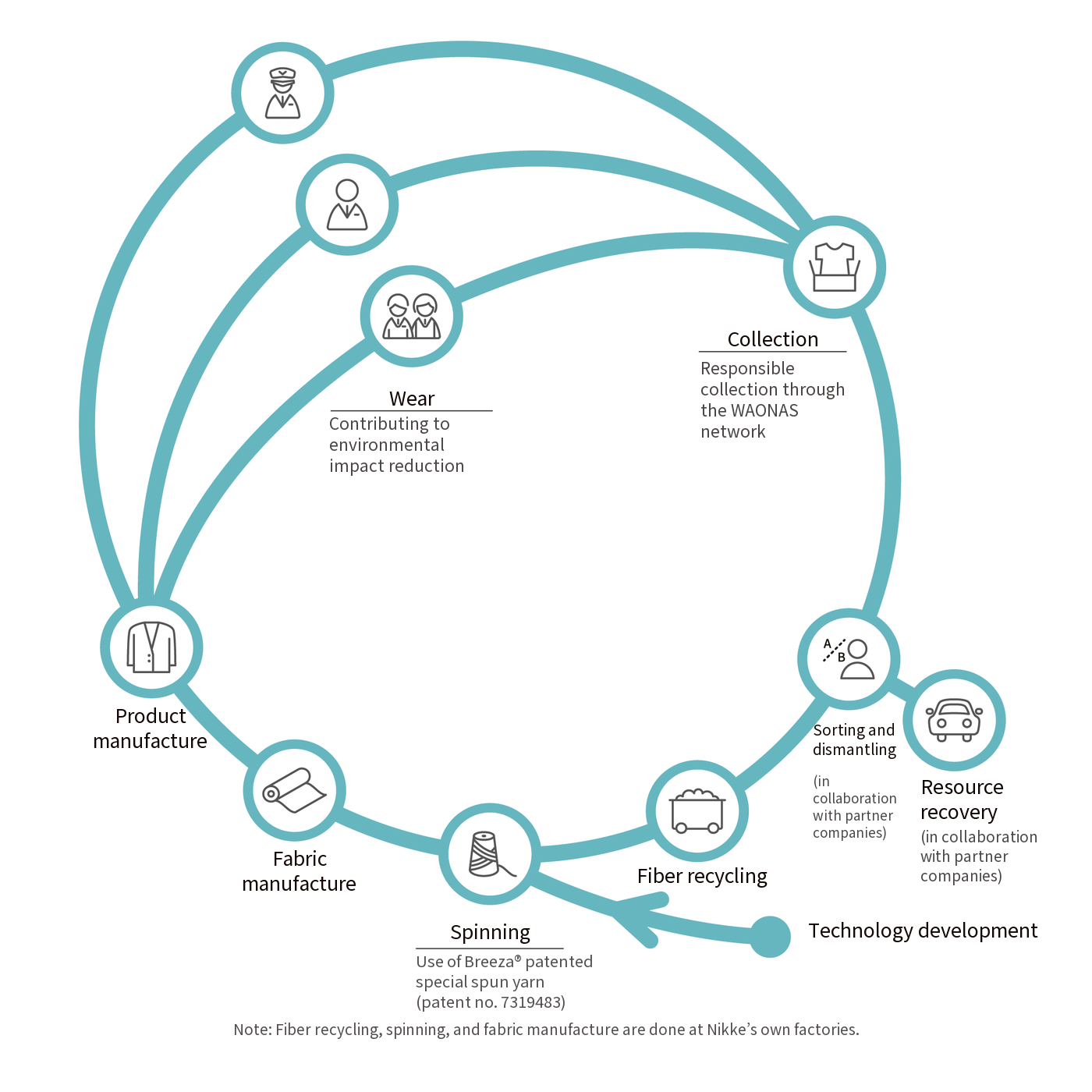
The Nikke Group has launched WAONAS, Japan’s first “clothing into clothing” wool garment circulation project. By further strengthening our garment collection and processing routes, we will build a system that returns more of the garments now discarded in large quantities to resources, and does so more efficiently. To make this circulation a reality, we are widely seeking partners, from suppliers to end users, to promote WAONAS together.
Japan’s First State-of-the-Art
“Automated Fiber Recycling Equipment” Introduced
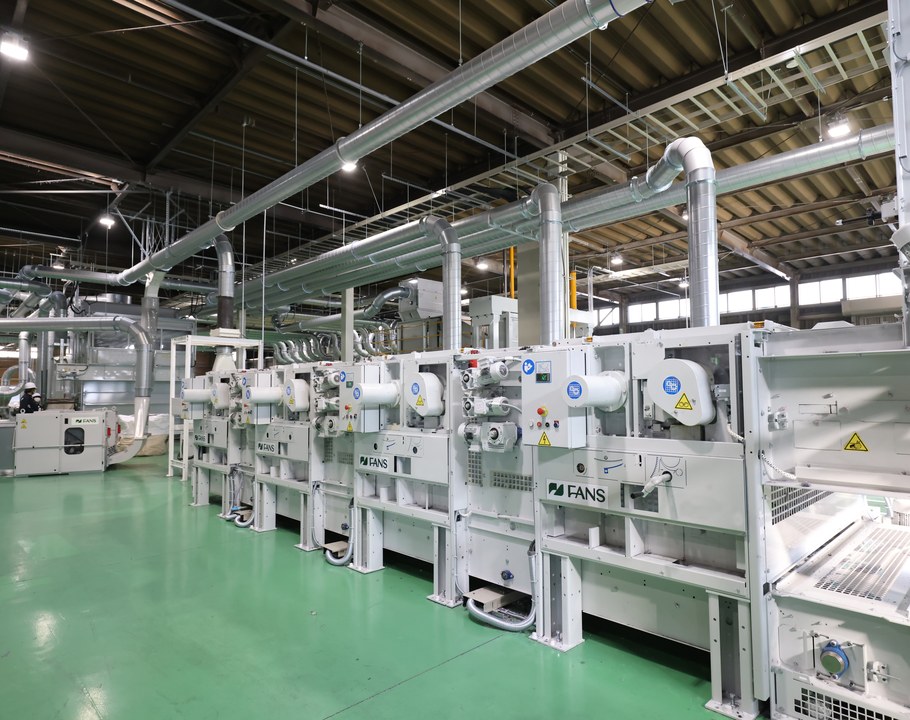
F&A Nonwovens Corporation (FANS), a company of the Nikke Group, began full-scale operation of its state-of-the-art “automated fiber recycling equipment” in 2025.
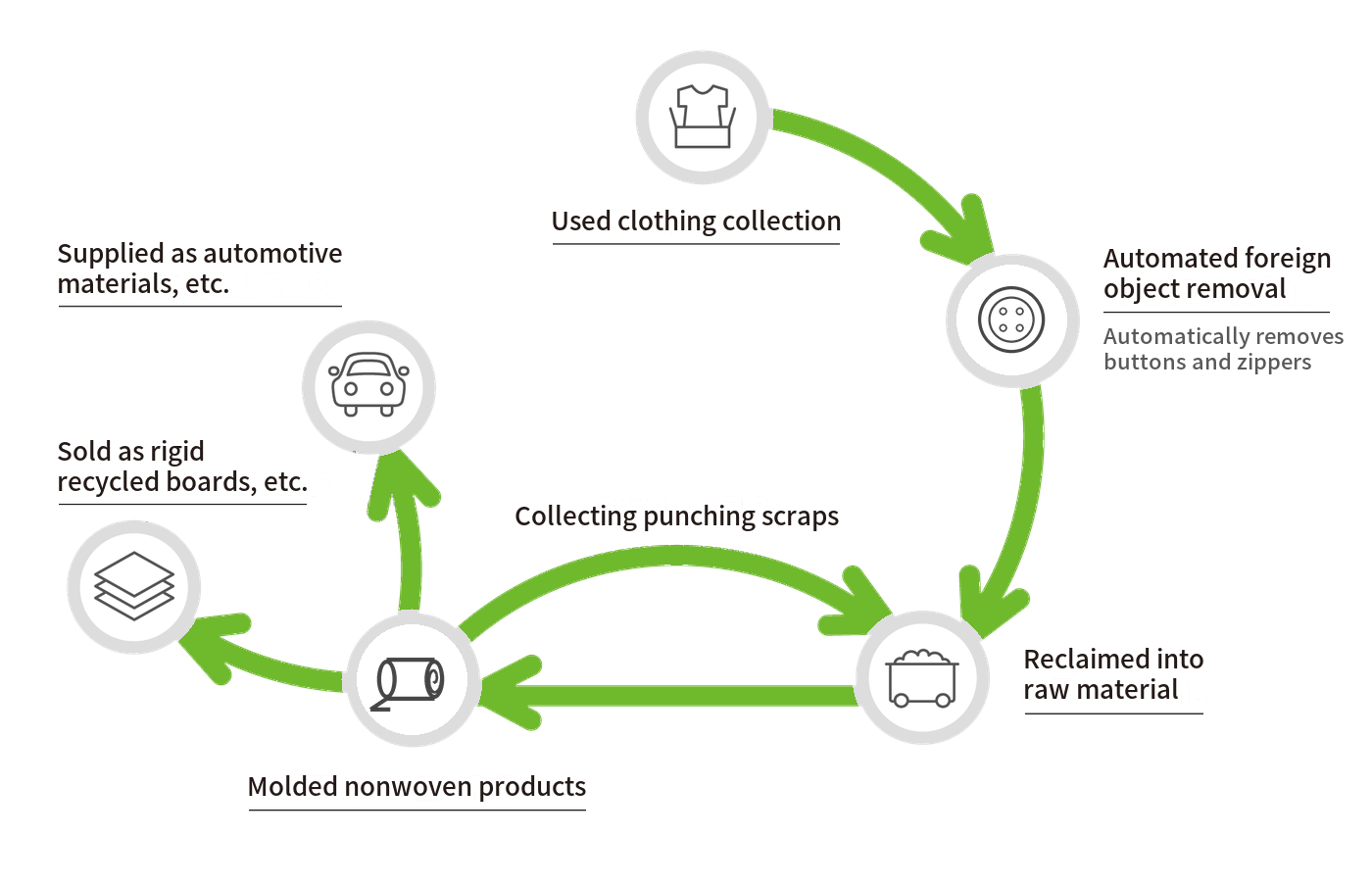
“Hanmo” (fiber recycling) is a technology that returns unneeded textile products and cutting scraps to a cotton-like fiber state. However, when the raw material is used clothing, removing foreign objects such as buttons and zippers takes considerable manual labor, which has made large-volume processing difficult. In recent years, the number of businesses engaged in fiber recycling has also continued to decline because of labor shortages.
The equipment that FANS has now introduced for the first time in Japan fully automates this foreign-object removal process and is a system that handles everything from raw material input to production of recycled fiber. As a result, production capacity has increased dramatically to approximately 10 times the previous level.
Building on this increased production capacity, FANS will deepen partnerships and cooperation with collection operators and local governments and strongly lead Japan’s circular economy.